
I feel this way too, sometimes. In truth barely have the attention span to sustain engagement with my own work, much less anyone else’s. Partly explainable by my diagnosis last year of ADHD, but also partly because everything seems to be getting longer. Remember the half hour show? The short novel? The 2 minute pop song? The 90 minute feature film? How far does our lust for story go before it’s too far? I feel this way these days about poetry as well. A 56 page book is a beautiful thing. Enough time to establish your voice and intent before leaving the party and heading home. Of course, my book of selected poems that’s coming next year, is over 200 pages, and I can’t help wanting to cut it, but it’s got 25 years worth of poems to cover. And then there’s my novel, which is over 400 pages and counting, but it’s a fantasy, and nerds seem to like books that can keep a door from swinging shut in the wind. I sometimes wish I could just publish 16 page chapbooks for the rest of my life. But think of the cost in staples.
About halfway through Tenet, the mind-frying Christopher Nolan film, I began to wriggle in my seat. Twenty minutes later, I had to sit on my hands to stop myself digging around for my phone. At 150 minutes, not only was the film long, it felt endless. Nolan isn’t the only one stretching his legs. Other film-makers – and podcasters, authors and playwrights – are increasingly choosing languor and scale over brevity. The last Tarantino film, Once Upon a Time in Hollywood, pipped Nolan’s by 10 minutes, while the forthcoming Bond instalment – when it finally appears – is set to be the chunkiest ever for 007, at two hours 43 minutes.
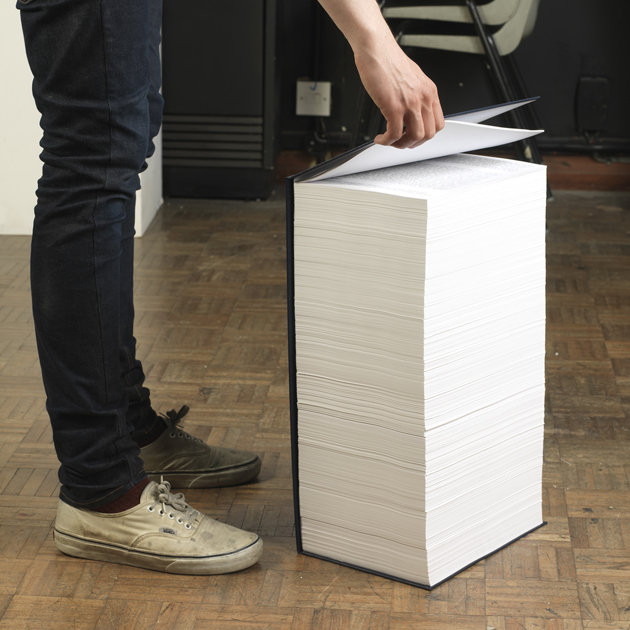
Length seems to be in vogue in other genres, too: just feel the thunder from JK Rowling’s latest Galbraith book as it lands on a table. At more than 900 pages, it’s her longest crime novel, about the same extent as Hilary Mantel’s Booker-snubbed doorstopper, The Mirror and the Light.
 Bookninja