
You know, every now and then these sorts of articles come up and for people like me they are cathartic tragedies. Look, some people turn to movies-of-the-week or Hallmark for their sappy, weepy fare. I read stories about people giving up their books. Speaking of which, what will happen to the thousands of poetry books I have collected over the years when I finally decide I need less space to live in? Well, hopefully my grandkids won’t tear them up for wallpaper. But maybe that’s not a bad idea. I used to go to an Irish bar on West 4th in NYC before the KGB readings — Swift, after Jonathan — and they’d decorated the can by shellacking pages from the novels to the walls. So as you were standing there pissing out your expensive pint from Sean, you’d end up fondly rereading some passage or another. I made a point of visiting all the urinals, over time. The Irish really know how to jerk the nostalgia chain.
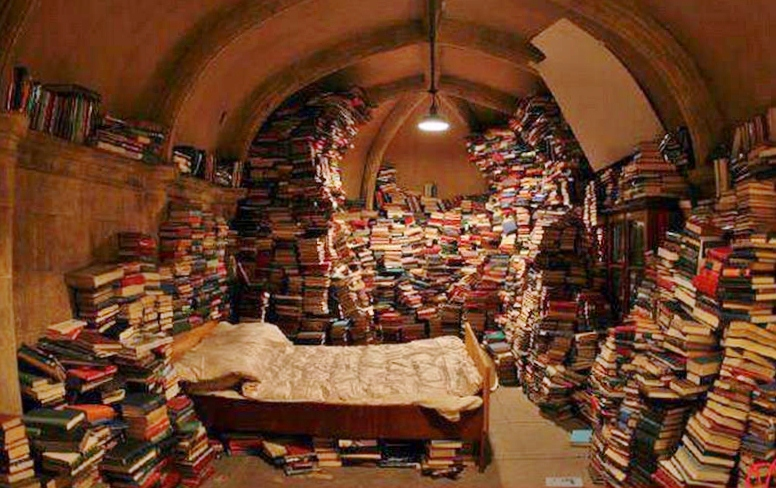
If there’s a silver lining to living in virtual lockdown, it’s this: Plenty of time to attack those lists of “things we should do around the house.” Which is how we came recently to complete a book purge, ultimately donating 27 boxes to a used bookstore, getting rid of six overflow bookshelves in the garage and moving two others back into the house. Now, for the first time in two decades, we can park in our two-car garage.
It was a bittersweet experience. With the bitter outweighing the sweet.
 Bookninja